27 Haziran 2012 Çarşamba

Jon XIII

To contact us Click HERE
Lord Commander Jon Snow and Ghost
Jon is pleading Selyse to help him with Hardhome and grant him some men, but Selyse declines all his asking by demanding that he simply let the wildlings die. When Jon says that he will do the ranging himself then she lets him, but tells him that he will have to answer for it and other things once Stannis is back. She then summons "the king of the wildlings", which turns out to be Gerrick Redbeard, a far descendant of Raymun Readbeard. His daughters are to be married to knights of Selyse's court, and she demands that Val marries Ser Patrek, but Jon simply deflects it by saying that he needs to rob her then after wildling custom. Selyse's answer is to summon Val to teach her the proper behavings of a lady, and Jon is dismissed.

Angrily, he makes his way to his chambers. Out of the court, he encounters Melisandre, but he doesn't want to speak with her, accusing her of all her prophecies being wrong. She asks after Ghost, whom Jon has locked up in his rooms since Borroq's boar seems to make him mad. She also says the ranging is a bad idea, and that she saw in the fires that all ships were lost, but Jon turns her down and goes to the armory. On the way he seeks out Leathers, with whom he has a short discussion about how many men they should take and where the advantages of either approach lie. He gets a report that Ghost is wild, even biting the stewards, which disturbs Jon deeply.
In the armory, where he can see that the report wasn't false since Ghost is really restless, he thinks about the right route to Hardhome, concluding that going along the coast, starting at Eastwatch, is the best way and would secure them the help of giants. Shortly after, Othell Yarwick and Bowen Marsh come to discuss further strategy, but both only complain about the wildlings and point out potential dangers, advising him to let them all die. He dismisses them in despair and goes out, where the snow has blown up on the Wall, and commands the cells to be dug free and Karstark to be brought in the cellars of the Lord Commander's tower so he doesn't die.
He meets Tormund, who mocks Gerrick Redbeard, and discusses the ranging with him when a messenger from Clydas comes to tell him of a letter he needs to see. The wildlings and Jon trade some wise words before Jon departs into the armory, where a letter sealed with pink wax and the word "Bastard" written on it is waiting for him. It is from Ramsay, who claims to have defeated Stannis in a seven-day-battle and taken his sword. Mance Rayder he demasked and put in a cage, warmed only by the skins of his six spear wives. He demands that Jon gives over Selyse, Shireen, Val, Monster and Theon to him, or he would come and cut his heart out. Jon reads the letter to Tormung, and then they talk for two hours.
After, Jon goes to the Shieldhall, where wildlings and brothers wait for the orders for the ranging to Hardhome. Ghost wants to follow, but Jon locks him in, so he doesn't attack Borroq. In the hall, Jon announces that Tormund will lead the ranging instead of him, reads the letter and states that he will ride to Winterfell. He will not command anyone to come with him, but take volunteers. The wildlings in the hall volunteer, the brothers and queen's men leave. Before anything more can happen, news drag him outside, where Wun Wun is currently killing Ser Patrek, who seems to have attacked him. Jon tries to defuse the situation when Whick Wittlefield stabs him in the neck. Before Jon can get his sword out, Bowen Marsh stabs him in the bowels. Jon falls to his knees, is stabbed in the shoulders and loses consciousness.
This chapter was surely the Red Wedding of this book. When I read it the first time, I was horrified. Like with the Red Wedding, all the elements were in place long before, carefully sowed over the book, but you don't really recognize them until it hits you in the face.When Jon then is finally stabbed to his seeming death, it comes out of nowhere, punching you. Now, in the reread, you see the signs everywhere. It's like Tywin's battles won with ink - a meaningless remark on the first read, ripe with looming doom when you read it again. The chapter of course is the one chapter standing out of the book, leaving the most questions and the most awful cliffhanger.

The first matter to discuss is, of course, Jon's fate. Is he dead? There are basically three possibilities how it can go. First, Martin really killed Jon off, he's dead and the Night's Watch goes to hell. This is possible, but not very likely. Second, Jon is not dead, but mortally wounded. SInce Tormund, Melisandre and others came out of the hall after him, they could have secured him after the fourth step, and Melisandre worked some magic or stuff that saved him. Or, third possibility, and the most likely, Jon is dead and will return somehow. For the latter, there are again basically three possibilities. The first is that Jon will return as an Other, turning the story somewhat upside down. Second, he is kissed back to life by Melisandre like it was done by Thoros. Or third, he wargs into Ghost, and instead of leading a second life like Varamyr, he somehow returns into his body.

I strongly opt for the last opportunity. I think that the basic outlay was done for that, especially in Melisandre's vision of "man becomes wolf becomes man again". The concept of skinchanging in general was very much emphazised in the book, and we also learned that Jon has really strong capabilities, although denied and undeveloped. So he might be of a level with Bran, therefore able to do some serious stuff. I would guess that we get another POV chapter for Jon in the next book, starting from Ghost's perspective and flying over the Heart of Winter or something before returning into his body, much the same like Bran's chapter in "A Game of Thrones" before he wakes up. At least, I hope it will be that; somehow I find this the most fitting solution. But Martin could of course come up with something entirely different.

The second question for this chapter is of course Jon's true identity. Is he Azor Ahai reborn or The Prince Who was Promised or both? Typically for Martin, the prophecy is solved: Marsh's tears provide the salt, Jon's smoking wounds the smoke, and Ser Patrek was certainly bleeding with his big star embroidered all over his clothing. It's not as strong as other fulflillments we find in Dany, but it's a small hole that was left and carefully hidden by Martin, surely not by accident. This is not the place to repeat the discussion whether Azor Ahai and the Prince Who was Promised are the same person or not, and whether Dany fulfills at least part of it, but one thing is certain - if Jon is meant to fulfill that role, he is not dead, but will be reborn - more or less instantly after being stabbed, since otherwise he couldn't be reborn amidst smoke and salt under a bleeding star. But then again, we don't know how much truth that prophecy will hold anyway.

The third obvious question is the truth of Ramsay's letter. Martin has himself more or less confirmed that it doesn't contain 100% truth, so let's have a look at what is likely. First, there is only one thing in the letter that he couldn't know without some success: Mance and his spear wives. It is not sure whether he really has Mance or if the wildling could escape, but he certainly captured one of the spear wives, otherwise he wouldn't have that information, and he knows that they were sent to retrieve "Arya Stark". The rest of the letter could be and likely is bullshit. First, everyone knows of Lightbringer, so Ramsay could just say he has the sword. Second, a seven-day-battle to defeat Stannis? It sounds like something out of ancient annals, not like something that really happened. And third, Ramsay demands Theon from Jon - he would however certainly have him had he defeated Stannis and conquered his camp. At least he would have captured Asha. But there is none of that; Ramsay doesn't know. So, it's not likely that he did it.

Of course, Jon doesn't know either. He swallows it, and that seems what Ramsay intended. Why exactly he wants to provoke Jon into marching on Winterfell I don't know; perhaps he wants to destroy Stannis' foothold in the Watch. It is possible that he was in contact with Marsh, although I doubt it. Perhaps he wanted to use the Watch's betrayal as a pretext to gain support from the Iron Throne. Perhaps he just likes to make a racket. We will know in the next book, I hope.

So, why does Marsh finally attack Jon? He could have done it times and times before, at better times, when he is not surrounded by hundreds of wildlings who just swore to fight for Jon. I still think that Marsh, as unhappy as he was with Jon's politics, did not plan on murdering him before he commited open treason. And make no mistake, his announcment of marching on Winterfell was exactly that, treason and defection. Marsh after all never concurred to Mormont's plan of the big ranging either and did carry it when it was ordered. He is a follower, after all, and Jon really stressed his loyalty in the previous chapters over and over again without him breaking. I am convinced that Marsh really lives the Watch besides all his shortcomings, and that he attacked Jon because he was a traitor, and not because he didn't like his politics.

The beginning of the chapter almost fades before these events, but it is not of no interest. We can see queen Selyse with her court acting in the vacuum of her own imaginations. They treat with the wildlings like they want and only acknowledge those fitting, ignoring the reality. The king Redbeard is hilarious, but they don't even get the idea that the wildlings won't accept him. Worse, they will try to force him on them, since the knights already married the daughters and would suffer serious smears on their honor if it was revelaed that Redbeard was just a bag of wind. It's strange anyway how Selyse tries to reward her own knights. What's with Stannis' men? Her husband will have taken the best and most able with him, but Selyse hands rewards to her collection of trash. Either Stannis wants to give his people better stuff, which is a promise in an uncertain future, or Selyse just sabotages his enitre nothern policy. Knowing this queen, I think it's the latter. And she doesn't even know it.

As to side notes, we again get the notion in this chapter that the direwolves sense the danger of their owners. Grey Wind sensed the Red Wedding, and Ghost sensed Marsh.Nymeria attacked Joffrey. Neither Robb nor Jon nor Eddard listened. The wolves really seem to have the hang out of people, judging them way better than anyone else. Second, I like the advice of maester Aemon about standing and sitting people. Jon lets all people in the hall sit on benches before speaking to them, since sitting men are more likely to listen, and standing men more inclined to shout. Nice remark.

The Queen's Hand

To contact us Click HERE
Ian McElhinney as Barristan Selmy in HBOs GOT
Quentyn Martell is dead, after three days of fighting death. The dragons he loosened have burned parts of Meereen and made their home in two of the pyramids. Only the rains gave quelched the flames in the city. Looking at Quentyn's burned body, Barristan muses about the death by fire and how ugly it is. He admires Missandei for being with the prince day and night and wonders if Dany is dead at all, fiercely denying it without putting his doubts to rest.

When the Shavepate enters, his mind shifts to questions of politics. The Green Grace whom Barristan send to the Yunkai'i to negotiate for release of the hostages has not yet returned. The Yunkish demands to restore Hizdahr to his throne and to slay the dragons still stand. Since the imprisonment of Hizdahr, the Sons of the Harpy have taken up their killings again, and the toll of the current night and day alone has reached 23, as the Shavepate reports, who demands hostages to be killed instead of Barristan's way to collect blood money from the pyramids. Barristan declines and calls the council into session.
In absence of Daenerys, all the commanders meet as equals under his supervision at a table in the throne room, from which Hizdahr's dragon thrones have been removed. Belwas returns to the council as well, visibly weakened by the poison, but alive. The first discussion point concerns the Dornish, who have been imprisoned. Most demand their death for treason, but Barristan just states that he needs them for something and moves to the next matter, the dragons. Hundreds of sheep were brought to the fighting pits, and as for now, the dragons go there when they are hungry and don't attack humans. They are not controlled either, however. The representative of the Stormcrows has no faith in the negotiations with the Yunkai'i, claiming that they are liars and that they need to free Daario somehow. The discussion moves to the object of the peace, and to everyone's surprise Barristan tells them that if the Green Grace should return without success, he would attack the Yunkai'i, shattering Hizdahr's peace.
That takes the discussion to strategy. For hours they ponder the question how best to deploy their troops, and in the end, the question of the dragons arises. Barristan says he is sure that they will join the fight once it commences, being drawn by blood and violence, but he doesn't say that he isn't sure at all whether the dragons will make any difference between the parties. After the discussion, he goes to the Dornishmen, who tell him how and what they did. Archibald Yronwood proves to be the more prudent of the two, grasping what Barristan wants, who sends them to the Yunkai'i with the rest of the Windblown deserters. Their task is to persuade the Tattered Prince to change sides and to free the hostages.
Barristan stands atop the pyramid again, watching the city and musing about the dragons. Rhaegal is the more dangerous of the two, he is certain. After that, Barristan gets the message that the Green Grace returned. He thinks she is a loyal, faithful friend to Daenerys. Obviously, the negotiations weren't succesful, so Barristan is determined to command the attack. The Green Grace advises him to restore Hizdahr, since the peace is too precious to risk it, but Barristan doesn't concur. Before the conversation can go any futher, the Shavepate enters the room and tells him that the Yunkai'i have flown bodies over the walls with all six trebuchets.
And there goes the peace. Barristan is determined to attack the Yunkai'i, and the negotiations are only a fig leaf with which he conceals it to preserve his honor. His plan seems sound enough: preparing the troops inside the walls, giving everybody an assigned task, and arrange a signal that can be seen in the whole city (the beacon fire) to be able to start every second. The chances are good, since the Yunkai'i are still weakened and they have reason to believe that two of the companies could go over. Barristan makes good use of all the advice he gets, not dismissing anything just because he hasn't thought of it or because he doesn't fully comprehend it. He even accepts clever advice from Missandei, which all speaks for him. He definitely is a good hand.
It remains unclear what bodies are thrown into the city. It doesn't seem too likely that they are the hostages, although I wouldn't object Daario dying (another thing with Joqho, though). I think it more likely to be plague corpses, as to bring the disease into Meereen too. The nobles of the city could barricade in their pyramids, while Dany's power base would suffer, so it seems a valid strategy for the Yunkai'i at that point. I would guess that Barristan isn't the kind of guy to be shocked by such strategies, so after the cliffhanger of this chapter's end he is likely to command the attack to commence immediately. We'll don't know until "The Winds of Winter", of course.
The last big questions centers around the Green Grace. Barristan thinks she's one of Daenerys' truest friends, but somehow I don't believe it. She seems false to me, like the Shavepate does, although the aggressive manner of the latter somehow make it more unlikely that he plays a double role than with the Green Grace, who seems more sinister. Barristan of course isn't the guy to dwell too deep into politics and insight into human nature, but one shouldn't discount the Green Grace too early as the poisoner: she would know that Hizdahr doesn't like locusts, and no one would suspect her. And from the beginning, she manufactured the peace and tried to defend it, and most importantly she is the chief arranger of the marriage with Hizdahr, so she may well be the harpy. Possible that she manufactured the body hauling herself when she "negotiated" with the Yunkai'i.
As to side notes, it's interesting that Barristan fears death in bed and wants to die on the battlefield. Perhaps this sentiment is, subconsciously, responsible for his determination to attack. Second, the knights of the round table he founds in the council are somewhat a blatant parallel, but then again, the theme of a table where everyone is equal is older than the Camelot tales and can be found in various cultures. Third, Barristan obviously knighted two of his squires now, having succesfully disposed Hizdahr. His fear of death certainly plays a role in this. It remains to be seen how knightly they will truly be. Fourth and last, we get some additional knowledge of the dragons: they are drawn to blood and violence, which leaves all sort of indications, especially regarding the use of them by the Targaryen kings as I discussed prior in my essay at the Tower of the Hand. If the dragons get all violent upon seeing it and can't differentiate friend from foe, you really don't want to have three of them on the battlefield at once. 

Daenerys X

To contact us Click HERE
Daenerys Targaryen (Artwork by Amoka)
Dany climbs down a stony hill which she dubbed "Dragonstone", since Drogon made his lair there. For days, she tried to live alongside the dragon, and she is pretty weak now. Since she saw a stream in the distance, she is now determined to follow it as long as it takes to reach the big river flowing to Meereen and thereby returning to her city. She was not able to control the dragon. Hungry and exposed to the cold nights of autumn, she walks the Dothraki Sea, drying up around her. While she walks, her mind wanders. She remembers her first journey through the grass as part of Drogo's khalasaar. Then she thinks of it breaking up after his death, og khal Pono, khal Jaqho and khal Mago making away with parts of the Dothraki. After that, she remembers the pit of Meereen, how she climbed on Drogon, enjoying the flight but unable to control the dragon. Hoping against hope, she longs for the rescue parties, imagining Daario finding her. She is convinced that the Yunkai'i are marching home by now, honoring the peace, and that Daario is safe.

At nightfall, she makes herself a bed of grass in the old ruins of a village. Falling asleep, she wonders who it was that poisoned her, whether it was Hizdahr or the Shavepate or the Green Grace. In the night, she has a vision of Qaithe talking to her from the stars, reminding her who she really is, and what. The next morning, ants are crawling over her and biting her. She gets up, shakes them off and walks again. She is hungry, and when she comes by some berries, she casts all caution aside and eats them. The rest of the day she spends retching green slime. That night, she dreams of Viserys, who blames her for his fate and calls her names.
On the following morning, her tighs are covered in blood. She is dizzy, not sure whether it's the turn of her moon blood, and presses on. In the grass, she imagines Jorah talking to her, chiding her for conquering Meereen instead of heeding his advice and to make for Westeros. When she sits beside the stream to drink, she suddenly hears someone and observes a Dothraki scout, who hasn't seen her yet. Suddenly, Drogon emerges and starts to hunt the rider. Dany, suddenly sure, calls him down, mounts him and chases the rider until they encounter a herde of his khalasaar, roasting a horse and then eating it together with Drogon. She then stands besides the dragon and waits. Hours later, khal Jagho shows up with his riders.
This chapter is one bitch. It pretty much sums up the style and mood of "A Dance with dragons", which is why it fits perfectly into the scheme here. I remember skipping through it on my first read, since I wanted to know what the heck was happening - it's the final chapter, after all! Still I have to force myself to read every sentence, failing sometimes. It's incredible how much stuff Martin hid in this chapter, like he did in the whole book. There is awfully much happening without it being explecitly mentioned, throughout the whole book, and you have to read it several times and really think while doing so to catch it all. So what's in here?
The obvious things first. Dany can't control the dragon, which makes for a nice contradiction of certain expections you would harbor: that she, after flying out of Meereen, got the old Targ-connection rolling and learned about the dragons in the intuitive way, for example. Instead, she's lost in the Dothraki sea, hungry, cold and dellusional. At the end of the chapter, she suddenly fits the pieces together, calls Drogon like she did nothing else all her life and steers him over to the Dothraki to take control of the khalasaar (presumably). Before this, she works off the guilt about her former decisions, notably letting Viserys be killed and discarding Jorah, by speaking to them as her own imagined friends.
So far, so good, but there's much more in the chapter, especially regarding the prophecies, and here it becomes real tricky. We have to recall the various prophecies first to see what actually happens here. That's the part where you, as a reader, need not only pay close attention but also have rich background in your head. Mirri Maz Dur prophecized that Drogo would be as he was when the sea got dry, the sun sets in the east and rises in the west, the mountains blow in the wind and when she will bear a living child. The first three things happened already, the fourth is at least possible: Quentyn - the "sun's son" of Qaithes prophecy - was killed in the east, thereby setting there, and he came from the west. The Dothraki Sea is drying up due to autumn, so this is fulfilled as well. And the pyramids were blown away by the dragons like leaves in the wind.
That leads to Dany's fertility. In this chapter, she miscarries. You missed it? Never mind, so did I. When Dany eats the poisoned berries and retches them, she accidentilly kills her child, since on the next morning, she has unusually heavy bleeding while not having had her menstruation for about three months. Of course, there are two ways to read this: first, she is now fertile again, can carry a child and it will only be a matter of time until the prophecy is fulfilled. Or, second, she is doomed to always lose her children, but can still conceive. Both is possible. Now, turning to the prophecies of the Undying, she definitely rides a mount to dread, as it was predicted, until she had ridden one to bed and to love already (Drogo, but also Daario). There were definitely fires lighted, which was also in their prophecy - the one for light back when she woke the dragons, and there was pretty much fire-lightening to death in the book. If she was enflamed to love for Daario is a question about how metaphorical you want to read them.
There certainly is even more I still missed in there, and I skimmed the Westeros.org boards before writing this particular chapter. Only swarm intelligence may be able to grasp everything Martin hid here, and that's why I say that the chapter sums up in a nutshell what this book is and how it is written. It certainly isn't what we expected, but it's a masterpiece in its own right. The worst thing, however, is that many references work only in connection with the chapters from "A Feast for Crows", and I'm sure that we all missed much of the stuff yet - I scraped the surface of it sometimes in this reread, but I came nowhere near the core. I understand now why it took Martin so long to write this stuff. It is very rewarding, and I'm determined for the next reread already.
As to side notes, we get two things. First, Dany mentions that the Valyrians controlled the dragons with magic horns and spells, which refers clearly to Victarion's horn. However, she can obviously control the dragons without that stuff (although the horn might be the key to get Rhaegal and Viserion back in line), which could indicate her role as Prince Who was Promised. Second, the seasons seem to reach the east only after Westeros. Since the Heart of Winter is located in Westeros, this makes sense. The Wall is a hinge of the world indeed.

Epilogue

To contact us Click HERE
Ian Gelder as Kevan Lannister in HBOs Game of Thrones
Red Ronnett is standing in the throne room before the Iron Throne. The Small Council has convened. He fervently pledges his loyalty to Tommen, offering to lead an army south himself to beat Jon Connington. Kevan dismisses him and confines him to his chambers before attending the next matter. He has the feeling that the two queen's presence, although their not here, lurks in the room, glooming the mood. Randyll Tarly states that the men Ronnett came with were unruly guys of Gregor's, and that only the Wall is fit for such when Kevan proposes to put them in the Goldcloaks. Kevan himself thinks that the Tyrells try to keep out Westerlanders from positions of power, but he doesn't speak it out loud.

The matter at hand now is Storm's End, to which Connington is headed if the reports can be believed. Mace Tyrell boasts that even if Connington took it it would mean nothing, since he would simply retake it - after the trial. Randyll Tarly doesn't believe in the rumors of the Golden Company and says that even if it were them they would pose no threat. Kevan remembers back in the days of the rebellion when he met Jon Connington, an arrogant but able youth back then, and is convinced that the years have made him more dangerous. He was convinced that after he lost the Battle of the Bells, Aerys would turn back to Tywin, but instead Aerys tumbled into his downfall.
All the councilors doubt the rumors that Aegon Targaryen is leading the host, believing or stating to do that they know he's dead, although Kevan remembers back telling himself that no one looked real hard at the body of the smashed princeling. Pycelle says that Daenerys also is in the east with her dragons, but she is dismissed as a threat for now. The most urgent problem the realm is facing just now is that it has no money since Cersei broke with the Iron Bank, and they can't raise taxes for fear of rebellion. Mace Tyrell claims that nothing of value was found on Dragonstone, but Kevan is suspicious of the Lord of Highgarden nonetheless.
The discussion goes back to the planned trials. Kevan reassures the others that regardless of the outcome Cersei will play no further role neither in Tommen's education nor in the governing of the realm but instead retire to Casterly Rock. He dismisses all other matters and brings the council to an end. Swyft is commanded to go to Braavos and to negotiate with the bankers directly, and he surely isn't happy about it. Since Swyft and Pycelle both asked for guards, Kevan grants them and then leaves for supper with Cersei and Tommen.
Cersei is a pleasant surprise, submittive and friendly. She scrubs herself clean every day and prays much with the septas the Faith has bestowed on her, none longer than seven days for fear of corruption. Cersei makes a harmless jest about Mace Tyrell rebuilding the tower of the hand, and then asks for the return of Lady Merryweather and her son. Kevan sees no harm in it and grants her the wish. He is then called to maester Pycelle in an urgent matter and takes his leave. In Pycelle's chambers, the windows are opened, and it's cold and dark. A white raven has arrived, heralding the arrival of winter. Before Kevan can make out Pycelle, he is hit in the chest by crossbow bolt. The shooter is Varys, telling Kevan that it's not personal, but that he can't allow him to strengthen the rule of Tommen. Aegon would make a better king, he says, and then sends his children forth to kill Kevan.
When I first opened the epilogue on my first read and realized Kevan was the POV character, I felt sorry. Since no one survives being in prologue or epilogue, Kevan was dead meat. And really, he dies. Varys, who seems to have hidden all the time in the numerous tunnels and holes. His estimation of the situation is correct. Kevan, clearly his brother's brother, has done a good job in securing the realm, although at cost of power growth on the Tyrell side. If Aegon's invasion shall be succesful, the realm needs to be destabilized. Since with Kevan dead and everyone suspecting Tyrell interference and a presumed victory of "Ser Robert Strong" Cersei will come back into power, the stage is cleared for the final disaster of Lannister rule.
In this chapter we can learn that Kevan was, after the High Septon of course, the driving force behind Cersei's walk of shame. He didn't so much as encourage it, but he certainly did not take any steps preventing it, in full knowledge of its implications. Like Cersei, he recollects memory of the walk of shame that Tywin engineered for his father's consort, and he knows exactly what it will do to Cersei's station, a knowledge that the queen herself only gathers in the middle of it. His objective obviously was to remove Cersei from power, but not to kill her, since he hopes she will survive, and to put her back to Casterly Rock out of the way. That plan is now blown to hell by Varys, who in the same turn also got rid of another Lannister power source at the Red Keep, Pycelle, in both cases blaming Tyrion and thereby adding further distractions.
It's interesting in this chapter to see again the long-term effects of Cersei's bad calls. On the one hand, the Faith has become such a power that neither Kevan nor Mace Tyrell can ignore it. The High Septon has become a player, and it will only be a matter of time until he or one of his successors becomes aware of the situation and tries to use it to his advantage. The Targaryens may try to make common cause with the Faith, and even succeed given the alternatives, but after that they will face the same internal opposition as the first Aegon did. On the other hand, the royal coffers are totally empty, all sources of money dried up. No one lends the Iron Throne any more money since Cersei ceased payments to the Iron Bank. That's only natural; who would want to lend money to someone known not to pay back at his convenience? Stannis' word, on the other hand, is iron, and the Targaryens, given their success, are more liable debtors as well. Great work there, Cersei. Harys Swyft will surely not sway the minds of the bankers, that's for sure.
As to side notes, Storm's End seems to become the number one propaganda objective. Everyone wants to hold it to prove just who succesful he is on the battlefield, but it is only taken by guile, magic and subterfuge. Second, Tommen mentions the "bad" tomcat again that Arya already chased and which likely is the kitten Balerion. Nice touch there. And third, we see little children serving in the Red Keep all over the place. If they were mentioned before so explicitly I totally missed it, but when one of them leads Kevan to Pycelle's chambers, you surely can see how Varys' network of little birds works.

A new review after the reread

To contact us Click HERE
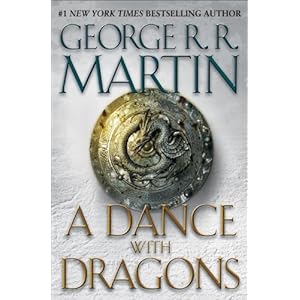
The reread of "A Dance with Dragons" is now complete, and it was a fun journey. I developed a deeper understanding of the book, the characters in it and the greater story arc involved. This blog will not publish new posts after this one. You can continue to read work from me on The Tower of the Hand. The comments for posts on this blog will stay active, and I will continue to answer them. That being said, let's return to the issue at hand: a review of "A Dance with Dragons" after it has been reread. To say the least, the second read was a whole lot different from the first read. That was of course true of the other books as well, but in the current volume a number of issues fell together, making the statement necessary. There was a lot of hate out there after people had read the book, and I joined into some of it especially regarding the chapters taking place in the east. That was, I have to admit however, unjustified. "A Dance with Dragons" is a piece of art, much like the other books, and the widespread disappointment could not have happened like that if not for unrealistically high expectations. I confess myself guilty on that account too, of course.
The expectations were unrealistic simply because we knew from the start that the book would be the second part of what was "A Feast for Crows", which gave way to the same disappointed expectations only to be later redeemed after it had sunk into people's mind and reread several times. It's much the same with "A Dance with Dragons". When I stated earlier that it was "a piece of art", I meant it. Martin's writing skills, the great characters and the general storyline aside, are visible throughout the whole book. We already know his stunning ability to tell the story from the point-of-view of his characters, to play with the knowledge they have, with rumors and predjudices. This challenges the reader to question what he thinks he knows, and to gather the whole picture together from various sources and inclinations.
In "A Dance with Dragons", another style element of Martin's writing is even more visible than just the POV-perspective. He manages to hide things that happen between the lines, so they are only recognizable by the keen eye of the reader. You have to pay close attention to details, you have to have previous details from previous details in mind, and you have to have a feeling for the overall world. This, one could argue, makes reading "A Song of Ice and Fire" more work than just skimming through your everyday Twilight novel. It is much more rewarding, however. Just a few examples of things you miss on your first read, which are between their lines and for which you have to pay close attention: Arya killing her victim with a poisoned coin, Wyman Manderly killing the Freys and baking them into pies, Dany miscarrying a child in her last chapter and the possible fulfillment of the Azor-Ahai-prophecy in Jon's last chapter. All these things are there, and once you know they are they suddenly seem to jump into your face (think of Manderly singing a song about the Ratcook!). You most certainly miss them the first time, however. These novels are puzzles that need to be solved and fit together, and it challenges you and makes the read so much more rewarding.
Of course, these puzzle pieces are not everything that you can find in "A Dance with Dragons", to be sure. When I first reviewed the book after my first read, I thought that the overall theme was failure, since no one really succeeds with what he wants: Jon with his wildling peace, Dany with her Yunkish peace, Victarion, Tyrion and Quentyn with their quest for Dany, and so on. That is, however, not exactly true. The first important thing to consider when you read "A Dance with Dragons", a thing that easily gets out of your mind, is that it is the second part of "A Feast for Crows", and it works only to its full extent combined with the previous novel. There are several themes that span across both books. We will explore them in a moment. These themes, in any case, are interwoven between the chapters and affect several characters, and these characters solve their part of the respective theme differently. You as reader can compare their approaches and results before the story culminates, also a bit hidden between the lines, in the final chapters of "A Dance with Dragons" and prepares the stage for "The Winds of Winter".
The first theme that is explored in the two books is ruling the peace. Three characters share this arc, supported by some others. The three characters are Cersei (in "A Feast for Crows"), Jon and Daenerys (in "A Dance with Dragons"). All three of them only recently came in power, and all three of them face the end of a war and a delicate, unstable peace. Their approaches radically differ. The outcomes don't; they all lose their power at least temporary. Jon and Daenerys are at opposite ends of the compromise spectrum: Jon is uncompromising and forces his vision of the peace through against all resistance. In the end, his brothers are left behind by his policy, not convinced or adequatly informed about it, and turn against him. Daenerys, on the other hand, compromises to the point of self-denial. She accepts the point-of-view and the sensibilities of the Meereenese, leaving her own power base in the dust and betraying all her ideals. In the end, it is hard to decide if Meereen is her city at all, or if she just restored it completely. Cersei, of course, uses the power she has in an entirely different way. She thinks she has to display force, which is right to a degree, but chooses the wrong opportunities and wrong styles for it - most notable in her decision to cease payments for the Iron Bank.
Supporting characters for these story arcs are Jaime Lannister, who serves as an eye on Cersei's madness, draws the conclusion that he doesn't want to have anything to do with the downfall in King's Landing and leaves. There is Barristan Selmy, who advises Daenerys and with surprising capability takes up the rulership after her disappearance. And there is Melisandre, trying to guide and warn Jon, suffering from the fact that she needs guidance as well since her reading of the fires most certainly is wrong regarding Azor Ahai.

The second theme is the journey to yourself. Several characters are on the road, mainly Tyrion, Brienne, Quentyn, Bran and Arya. They are all lost in a way, trying to find a meaning, a purpose, and a new approach to their very self. This story arc is most developed in Tyrion, and least developed in Quentyn, but that is mainly a product of the pages these characters get and the purpose they serve for the overall story. Let's start with the characters with the fewest chapters. Surprisingly, and for me at least disappointingly, Bran only got three chapters. The journey to the Three-Eyed-Crow is finished in the first, which really comes to a surprise after the long journey through the North displayed in "A Storm of Swords" (which should silence those who claim that Martin just puts endless descriptions in the book to lengthen it. Why not here?). In the second and third chapter, he learns that his powers are even greater than he thought and what true greenseeing is like. His character development is drastic: he severes himself from Jojen and Meera, uses Hodor as a tool more and more and fully embraces a fate as greenseer, which could very well involve to grow into a tree and never to leave again, becoming like one of the old gods himself.

Quentyn, a new character, only has four chapters. They are mainly a deconstruction of the classical knight's tale, since he fails consequently. Through his eyes, we see the fall of Astapor, though, and learn about the working mechanisms of a mercenary company. He also releases the dragons in the end, thereby changing the dynamics. He never really becomes self-aware, though, thinking that he has a destiny to fulfill that clearly is not his. Brienne is searching for a new purpose. Her quest for Sansa Stark is, the reader knows, futile, since Sansa is in the Vale. Through her eyes we experience the full implications of war on the smallfolk and the daily hardships and injustices that these people have to endure. Brienne is forced to reflect about her image of knighthood and the idealized image from the songs and stories and to finally discard it, which is another theme that drags throughout all the books, especially in Sansa's story arc.  Arya, after her journey through Westeros, finally reached Braavos and starts her training as an assassin, but it doesn't feel right. Should she go through with it, her character would cease to exist, which seems unlikely to happen. For now, however, she evolves into quite a different thing than she was in the beginning.

Lastly, there is Tyrion. In my initial review, I stated that his chapters are disappointing, dragging endlessly as kind of an Essos road movie. This is at most half-true, however. Tyrion is the character that is most profoundly lost, and his chapters reflect that. At the beginning of "A Dance with Dragons", he is permanently drunk, shoved around by everyone and pushed and pulled into directions, willingly submitting to whatever path is layed out before him. On the journey with Connington and Aegon, he finds much of himself again but is still plagued by his inner demons and without his own impetus. It takes his captivity and enslavement to reactivate the old Tyrion. At the end of "A Dance with Dragons", Tyrion is grasping opportunities, found his wits again and takes control of even the most desperate situations - most like he did back in "A Game of Thrones".

These themes are placed very strongly in the books, but it is nevertheless not easy to discover them, especially since they are spread over two books that need to be read as a unity. Only regarding these themes it becomes understandable that two things one would have expected to play a role in this book in fact don't: the Others and the dragons. The Others never even make an appearance again after having been featured so heavily in "A Storm of Swords", and the dragons are either chained or fled early in "A Dance with Dragons" and continue to play a role only in the final stages of the book. Several people have expressed doubts whether the Others would, after his pause in their appearance, pose a conceivable thread in "The Winds of Winter" or if they would just be viewed as a convenient plot device. Again, one has to read carefully and aware. Throughout Jon's chapters, the threat of the Others is always there. They make no appearance, but the wildlings - who refuse to talk about it - where seriously attacked by them in the aftermath of the battle with Stannis, and everything Jon does - really everything - is driven by the knowledge that the Others are out there and that they are in a fight of life vs. death. His failure is to realize all this and to do nothing to convince others, mainly Bowen Marsh, of it.

Other themes are more woven in the narrative and more difficult to find. This is especially true for the prophecies. To really grasp everything going on in that respect, you have to not only keep in mind all the prophecies that were muttered throughout the four previous books - word for word - but also really look out for small details. The fuflfillment of the Azor-Ahai-prophecy in Jon's last chapter is such a thing. Ser Patrek of the Mountain sports a big star as sigil and gets beaten to bloody pulp, therefore we have a bleeding star, Jon's wounds smoke and Marsh is crying, so we have salt in his tears. Now Jon only needs to survive somehow and/or be reborn, and we have the propehcy fulfilled in the unlikeliest manner imaginable. Such small details - which may be, keep in mind, totally meaningless distractions - can be found through all the book.

The attention to such details and the careful orchestration of every event and character development are what makes "A Dance with Dragons" such a piece of art. I know really and totally understand why Martin needed so long to complete this. It's not only the story itself, like I first suspected, which is complicated enough in its own right. All the small things and details that all add up and fit must have given him real nightmares and pose a logistical nightmare without precedent. I am humbled after my second read, and are more convinced than ever that Martin knows what he is doing and that all the ordeal of waiting is worth it. I was wrong not to trust him, and so were all who until now think that "A Dance with Dragons" is the weakest book of the series. This is my sincere opinion. I repent, and I make ammends. And I can't wait for "The Winds of Winter", which I will then hopefully not burden with expectations that it can't and quite frankly shouldn't fulfill.